-1920w.webp)
-1920w.webp)
Send us the square footage and a line about what happens on the floor, and we will settle the build from those two facts before anyone comes out. Over a wide open area we generally put forward a solid color rather than a flake blend, because flake is read from a few feet away and a broad floor is read from across the room. A plain finish also keeps the surface continuous, so the light travels over it rather than breaking up across a pattern. Where the concrete below is sound and appearance is not the point, we will say so and leave the resin off it. One color across the whole area, with no pattern to line up, is where most of these floors land. A polished finish, where the slab itself becomes the floor, is the version that skips the coating.
Area moves the figure first, and it moves it through preparation rather than through material. Taking a thousand square feet back to open concrete takes far longer than doing a single bay, and it is the stage that cannot be rushed without showing itself a year later. In our project record there is a warehouse floor of a thousand square feet that took two coats of polyaspartic and no epoxy at all, which is the kind of call the area and the traffic make on our behalf. We quote the preparation from what the grinder finds, and we tell you at the survey which way we expect it to go. What changes once a floor is measured in thousands of square feet is mostly the preparation and the number of people on site. The jobs we have finished, each with its area and system, show where the line between the two builds falls.
What crosses a floor tells us more than the size of the room does. In a garage the load that matters is a warm tire standing in one place, because the heat held in it will soften a thin coating until the tread prints itself into the surface. Everything else a garage collects works differently again: a dropped socket chips an edge, a leaking bottle leaves a ring, grit dragged in on a shoe wears a path to the door. The tire is what we build the top coat around, since it is the only one of those that acts on the floor every single day. The shop and garage floors we coat in Moorpark are specified from the same two facts. A unit of this size in Thousand Oaks usually differs only in how much of the old surface has to come off.
A garage floor is built in layers, and each one does something the layer above it cannot. The base has to key into open concrete, so we grind the old surface away until the slab beneath is bare and rough enough to hold it. The middle layer carries the color or the flake. The top coat is the only part that ever meets a tire, which is where the hardness belongs. Where the slab has dropped away at one end, we put that right before the first layer goes down and quote it separately, because filling a hollow with coating is a repair that fails twice. A domestic garage is the small end of the same build. Where the floor has dropped away from level, that is a separate trade with its own materials. The coating decisions that get made on the slab itself, such as grip in the top coat, are settled while we are standing on it. The first layer of a Simi Valley garage floor usually goes down over an original slab that has carried something before, so stripping it sets the timing more than the coating does.

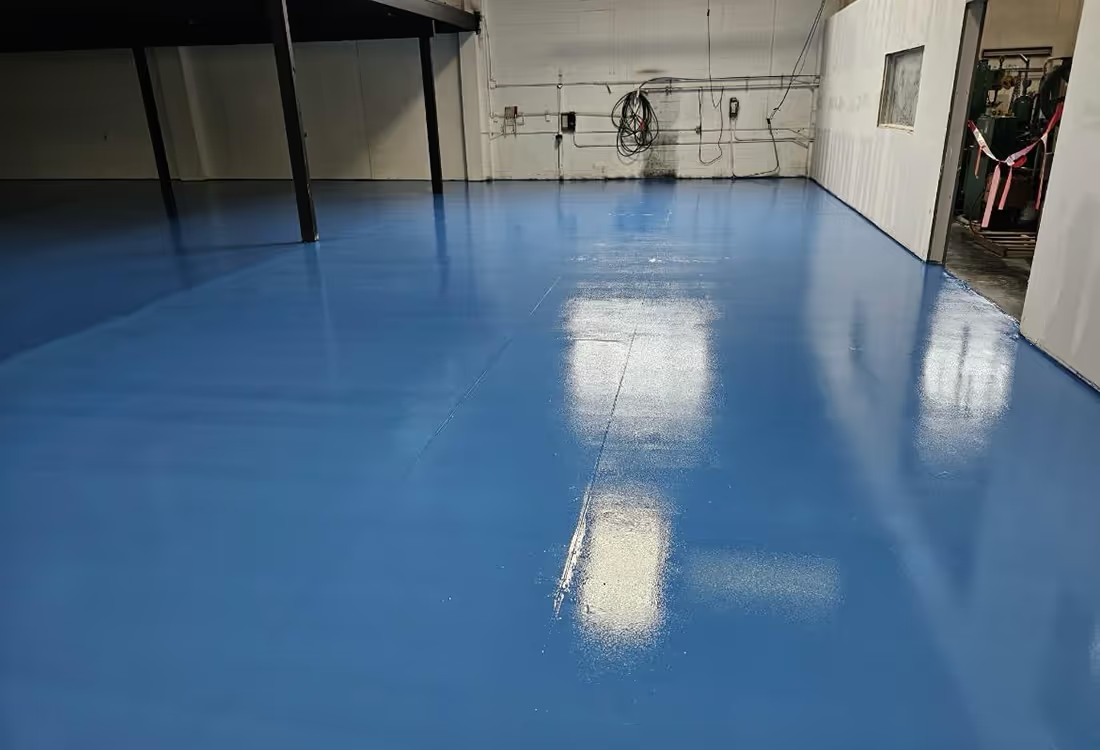
On a floor of a few thousand square feet the problem stops being the coating and becomes the concrete beneath it. A slab that size is never truly flat, and a wide sheet of gloss will show every dip in it the moment the lights go on. So we settle early whether to grind the whole area to one plane or work with the fall it already has, and that choice belongs to you as much as to us. We also mark out where each day of work will stop, because a large floor laid over more than one visit needs its joins put where a rack leg or a doorway will keep them out of sight. A Ventura interior asks the same care at the perimeter, where the last band is opened by hand rather than by machine and takes a real share of the hours.
The order of work stays the same at every size. We start at the slab, saying up front what we think is under the old surface, then grind it back to open concrete, cut out and rebuild whatever is broken, lay the base, put down the color, then seal it and leave it to harden before anything is driven or wheeled over it. What moves the figure is the area first, then what the finished floor has to carry, then how much repair the concrete turns out to need once it is open, and how much of the place has to keep running while we are on it. Send us the square footage and one line about what runs across the floor, and we will come back with the epoxy flooring build we would specify for it in Simi Valley.
GET A FREE Estimate
Please give us a call or fill in our contact form to receive more information about our flooring services.
For instant reply you can call us, text us, or connect with us on social media.

