

The concrete decides the outcome, so the machines come out first. Diamond grinding strips the bay back to raw slab, taking with it whatever has been put on the floor over the years: garage paint, a hardware-store kit that lifted, an old sealer, and the oil that soaks in under a parked car. Grinding does a second job people rarely think about. It opens a surface that was floated smooth when the house was built, and without that texture epoxy has nothing to bond to.
Then we fix what the grinding uncovers, and that work happens before any epoxy is mixed. Cracks get chased out, packed and levelled off so nothing telegraphs through the finish. Movement joints stay open through the coating, because a slab that cannot move will crack somewhere you like less. Contaminated patches are pulled clean, and if a moisture reading comes back high the bare concrete gets a barrier primer before the base coat. We repair what is there and coat it. That is the job, not a surcharge on it.
After that it is three layers: pigmented base, flake or color into it while the epoxy is open, then clear polyaspartic across the top. Six to nine hours covers a typical Simi Valley two-car bay, so we take the space in the morning and you are parking on it by the evening. Most bays here are original slabs that have carried something before, which is why the stripping stage tends to set the timing. Should the floor turn out to sit off level rather than merely tired, that is corrected first and coated afterwards, and if bare polished concrete appeals more than a coating we do that as well.
Almost every garage we price ends up as one of three epoxy finishes, and the split between them is really about how forgiving you need the floor to be. We carry samples of each blend, and putting one down on your own slab answers the question far better than a screen does.
Flake is the one most Simi Valley bays get. Vinyl chips go into the base while the epoxy is still open, packed until the slab disappears under them, and the clear coat seals it all down. You get a little tooth underfoot, which counts for something when the floor is damp, and a heavy chip pattern hides the scuffs and dust a garage in real use collects. For a bay that works for its living, flake is what we recommend.
Take the chips away and you have solid color: tinted epoxy, clear seal, one continuous tone. It photographs best of the three and looks the most deliberate. The trade is that a plain surface has nowhere to hide marks, so it suits a slab that has come up well and an owner who keeps the bay tidy. Grays and stone shades are what people pick. Once the garage doubles as a home gym or a workshop, a flat floor stops it feeling like a garage.
With metallic the pigment sits in the resin and gets worked while it cures, so the pattern that appears belongs to that floor alone. Nobody gets the same one twice. It is the choice for a bay that gets shown off, less so for one holding two cars and the bins. It is also the fussiest to repair if something heavy lands on it, so we steer it toward garages that have become proper rooms.
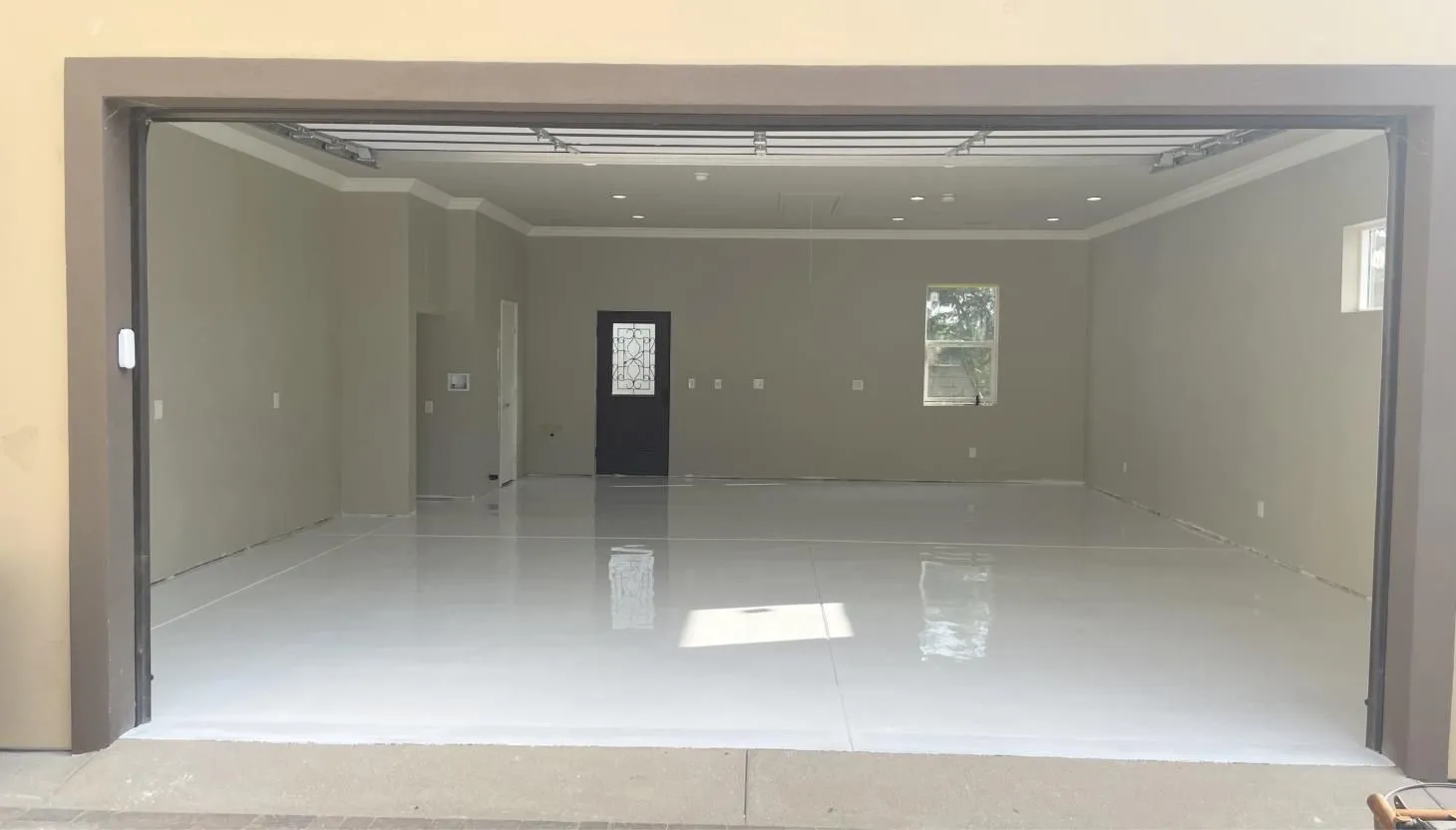

Two variables account for most of the quote. One is floor area, and Simi Valley bays we price usually sit in the 450 to 700 square foot band. The other is how the concrete has aged, since a slab in good order only wants grinding, whereas a tired one wants chasing out, filling and a second grind before the base coat is anywhere near it. Reckon on $5 to $7 per square foot for a garage here, with a two-car bay filling one day.
Which finish you pick shifts it as well. Solid color goes down fastest, metallic takes the longest, and flake falls in between. The resin matters too. Polyaspartic hardens in hours where epoxy wants days, which is how the bay comes back to you the same evening, and it holds its shade instead of yellowing off the way an epoxy top coat does. Every quote is worked out on your slab, never off a price list.
We hold a 5.0 rating over more than 120 reviews and are usually a fortnight or so out. Send the dimensions of the bay and a photo of the floor as it looks today, or ring (818) 359-3932, and you will get a proper number back for the epoxy or polyaspartic floor rather than a range off a website.
GET A FREE Estimate
Please give us a call or fill in our contact form to receive more information about our flooring services.
For instant reply you can call us, text us, or connect with us on social media.

