-1920w.webp)
-1920w.webp)
Hot tire pickup is the failure people actually see. A tire that has been running is hot and slightly soft, and it presses that heat into the coating for as long as the car sits on it. A thin or under-cured film goes tacky underneath and lifts away with the tire when the car is next moved, taking a patch of floor with it. None of that is bad luck. It is a coating that was never specified for a vehicle, on a slab that takes one every day. What resists it is thickness and a full cure, which is why a floor meant to be parked on is built up in layers rather than rolled on in one. The same resin family covers everything from a single bay to a shop floor, and what changes is the build rather than the material.
Chemicals are the other half of it. A garage collects gasoline, brake fluid, coolant and battery acid in small amounts over years, and each attacks a coating differently: some soften it, some stain it, some work underneath it at an edge. Bare concrete absorbs the lot. A sealed resin floor gives them nothing to soak into, so a spill stays on the surface until it is wiped up. We specify the top coat for the worst thing likely to land on it rather than the average. Resistance and grip are both set by the last coat rather than the first, so that is the layer worth talking through. Flake earns its place for the same reason, because a busier blend hides the marks a working garage picks up where a plain floor shows every one.
For a garage we lay an epoxy base and finish it in polyaspartic, and the reason is the division of work between the two coats. Epoxy is the better adhesive: it wets into ground concrete and holds on. Polyaspartic is the tougher and faster surface, and it is the one that meets the tire. Putting the hard-wearing coat where the wear happens is the whole idea. A polyaspartic top coat also takes a vehicle back sooner than epoxy would, which matters when the garage is the only way into the house. The polyaspartic floors we have already finished show what that surface looks like once it has cured. Where a Palmdale garage door stands open to the afternoon sun, that top coat is picked for the light as much as for the tire.
None of it holds on a slab that was not prepared. We take the surface back with a grinder until the resin has something to key into, then cut away and rebuild anything broken. A garage slab is usually the least even in the house, and where it has settled the low spots are filled rather than flooded with extra resin, because resin shrinks as it cures and a thick puddle of it cracks. Bringing a settled slab back to level is its own piece of work and we quote it as one. The same build goes down on the garages we coat around Santa Clarita, and a Sunland garage of the same size differs only in how much preparation the slab turns out to need.
-1920w.webp)
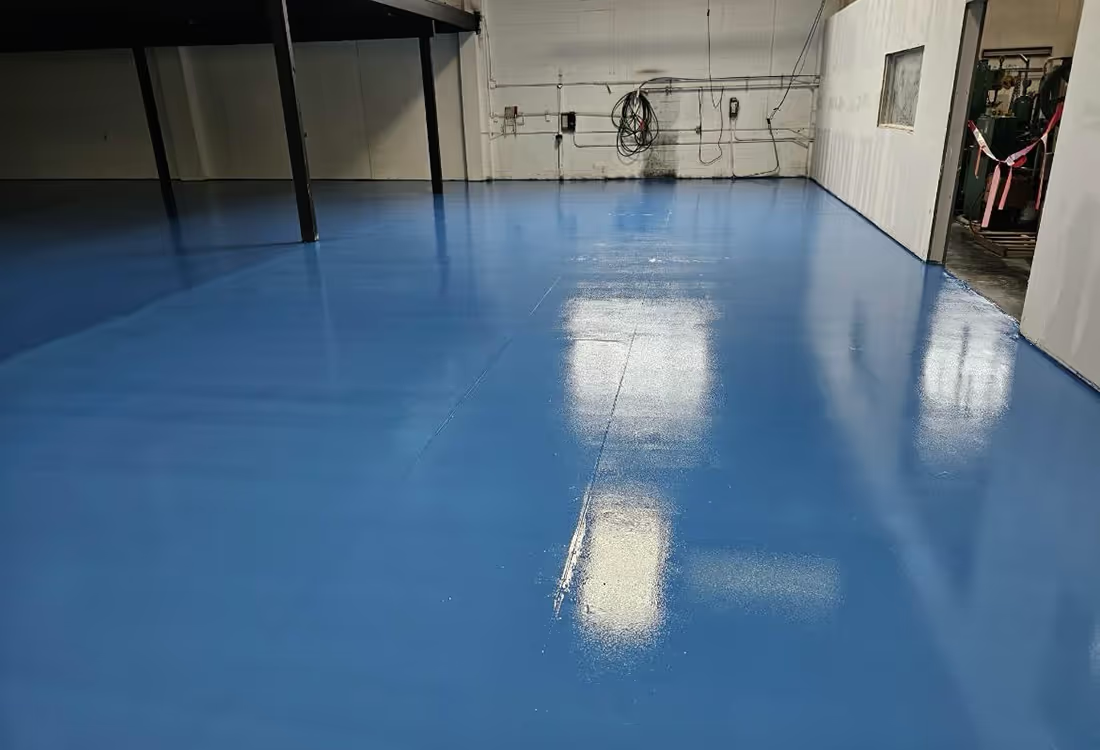
Commercial floors take those two attacks at a larger scale, and one more besides: wheels that are not rubber. A pallet truck or a workshop trolley runs on hard nylon, and it puts the whole load onto a strip an inch or two wide, which finds any patch that was not properly stuck down. So we test adhesion before we finish rather than after, and where a coating is the wrong answer we say so and specify a heavier system. Every floor we finish goes onto the record of completed jobs, with the system used on each, which is the quickest way to see whether we have done something like yours.
The sequence is the same whether it is one bay or a whole unit, and we will walk you through it on site. We grind the slab back to clean concrete, rebuild whatever is broken in it, lay the epoxy base, broadcast the flake while it is still wet, scrape back the excess and seal it, then leave it to cure before anything is driven onto it. What sets the number is what the floor has to resist, because a unit storing solvents and taking wheeled loads all day needs a heavier specification than a garage that holds bicycles. After that it is the area, the state of the slab once we have opened it up, and whether you need the space usable while we work. Ask us about that Palmdale garage, then tell us about yours, and we will price the epoxy flooring against what your own floor has to take.
GET A FREE Estimate
Please give us a call or fill in our contact form to receive more information about our flooring services.
For instant reply you can call us, text us, or connect with us on social media.

