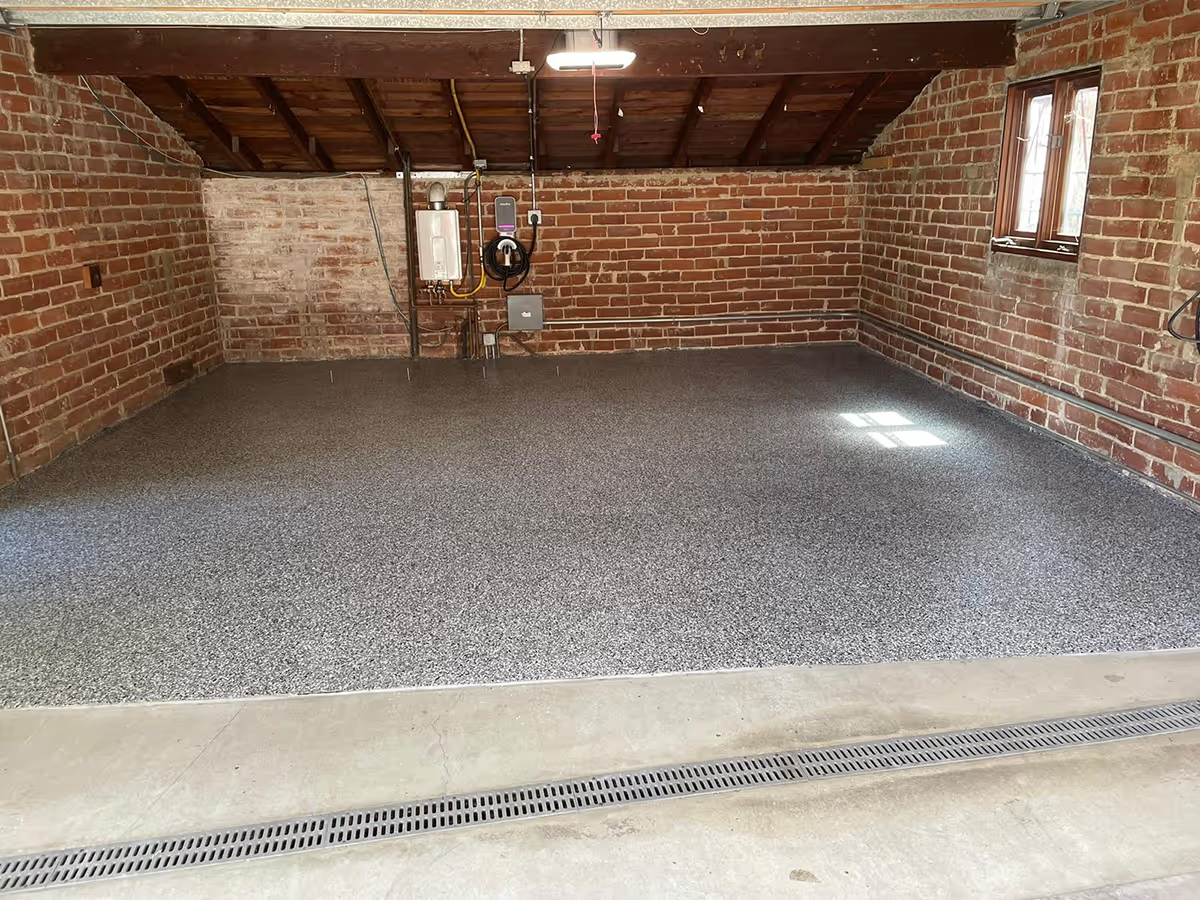

Preparation is most of the day, and it is what everything afterwards stands on. Oil has to leave the slab first: epoxy will not grip through it and neither will polyaspartic, and the patch a vehicle has parked over for years is exactly where a coating gives up first. The surface is then taken back to bare concrete with a diamond grinder, whether what is sitting on it is an old sealer, floor paint, or the last of a kit somebody rolled on one weekend, and the machine keeps working until the same clean gray shows wall to wall. Open cracks and broken corners get routed out, packed with mortar and brought flush. Saw-cut joints we carry up through the epoxy instead of filling them, since a joint shut at one point simply reopens a few feet along. Oversized and detached bays frequently turn out to be two pours from two different eras, and each half gets its own reading before either sees a coating.
With the concrete open, three coats go over it. The base is pigmented and driven down into the ground slab; which of the two materials it is comes down to how soon the bay has to hold a vehicle again, epoxy when there is time and polyaspartic when there is not. Flake or pigment drops into that base before it sets, which beds the finish into the epoxy rather than stranding it on top. A clear polyaspartic layer goes over the lot to close the floor, and from that day forward it is that layer taking the wear while the color below is left alone. That order is the same in every bay we coat, whatever ends up on top. A standard two-car garage is a day on site, and an oversized or detached shop bay can run into a second. Foot traffic is fine that same evening, a vehicle waits appreciably longer, and running polyaspartic through both coats shortens the second of those two waits.
The base below and the seal above do not change. The coat between them is the one you are actually choosing, and it settles what the floor looks like for the next decade. Three finishes account for very nearly everything we lay in this city, all of them epoxy running under a polyaspartic seal, and chip blends and tones are far easier to judge against your own concrete than off a screen.
Chips are broadcast into the wet epoxy and locked under polyaspartic, which gives a floor with a little texture to it and grip that holds up when the concrete is wet. Most Sunland garages finish on flake, and the grit question is a large part of why. Fine sand walked in off a driveway is abrasive, it settles into a busy blend without ever reading as dirt, and a patched or previously cracked slab disappears underneath one. A flat color hides none of that.
Solid color epoxy shows the concrete's history more honestly than anything else we lay, because there is no busy pattern in front of it and a filled crack or a shallow dip stays visible. Mid grays and sand tones take most of the choices here, dark enough to hide a tire mark and light enough that you can still find a dropped socket. Where a bay is kept in order and used for one purpose, the epoxy reads as a finished room instead of a coated slab.
Metallic work is pigment moved by hand through the epoxy as it sets, so the pattern is made on the day and no two of them finish alike. That is the whole attraction and equally the whole caveat, since nobody can show you yours before it exists. It suits a bay that gets opened up and looked into, not one holding two vehicles and the recycling. Through the door into the house the build is the same and the demands are not.
-1920w.webp)

No one can price a garage floor honestly over the phone. Three answers do it: how much concrete there is and what state it is in, which epoxy or polyaspartic build goes over the top, and whether coating that particular slab is the right call at all.
Area gives the opening number and the condition of the slab decides the rest. A bay that has carried one coating and is otherwise sound grinds up quickly and takes very little filling. One that went paint, then sealer, then a kit rolled on over a weekend can absorb most of a day before the epoxy is even opened, and the deep lots here tend to hold the older and larger structures. Where the slab has genuinely sunk instead of just wearing thin, bringing it back up is a job in its own right, and quoting it as a coating is how an estimate comes apart later.
Epoxy below with a polyaspartic seal above is the usual specification, and nothing else reaches a finished bay for less. Taking polyaspartic the whole way through is dearer, and what the money buys is calendar: the garage is usable again far sooner, and the color holds instead of drifting amber, which is what epoxy does over enough years of sunlight. Metallic epoxy sits at the top of the range, because it is placed slowly and the pattern will not be hurried. A bay standing open to the afternoon sun through a Sunland summer is a straightforward argument for the polyaspartic build.
Three cases come up often enough to be worth saying out loud. Concrete that came out flat, has stayed sound and is clean already can be polished instead, which costs less and leaves nothing on the surface to chip off. A slab pushing moisture up from below has to be dealt with before any epoxy covers it, or the floor will release and the material will take the blame. And a detached bay with no door seal and a dirt approach will keep loading grit onto the finish whatever we lay, so the threshold gets sorted out first.
Once those three are answered the figure stops being a guess. A Sunland garage in epoxy usually lands between $5 and $7 per square foot, and a two-car bay takes a single day. Our rating is 5.0 across 120+ reviews, the calendar is running roughly two weeks out, and from here the drive is a short one. Measure the bay, photograph the floor exactly as it looks today and send both over, or call (818) 359-3932.
GET A FREE Estimate
Please give us a call or fill in our contact form to receive more information about our flooring services.
For instant reply you can call us, text us, or connect with us on social media.

