-1920w.webp)
-1920w.webp)
A resin floor covers the slab in one unbroken layer, so there are no joints or grout lines running across the room. In a house the choice that matters most is what gets broadcast into that layer while it is still wet, because that is what decides the finish and the texture underfoot.
Two routes cover most rooms. Flake is scattered across a wet base coat and then sealed over, which leaves a lightly textured, speckled surface, and the blends carry names rather than numbers. Outback and Gravel are the two we used on garages in this city. A solid color leaves the flake out and reads as one even tone. It is worth looking at flake broadcast into the base coat and a single solid color side by side before settling on either.
A garage is harder on a floor than any room inside the house, and it usually starts from a worse slab. Of the four garages we finished here, one was bare concrete carrying oil stains, one had damage across the front, one had been covered in glued-down yoga mats, and one was simply worn with age. Preparation is most of that work, because adhesive and old coatings have to be ground off and cracks and divots patched before any resin goes down. Settling what a garage floor has to cope with comes before choosing how it looks. How much of that preparation a slab needs is one of the two things that set what a Flintridge garage floor costs, and it is read off the concrete rather than off a rate card.
Flake earns its place in a garage for a second reason. The texture it leaves gives some grip underfoot, which matters on a surface that gets wet from a car. On one of these jobs the slab needed a moisture vapor barrier laid under the flake before any of that could start. All four were built on a polyaspartic base and seal coat, and the three with times recorded came in at seven, eight and six hours, each inside a single working day. The garage floors we finish over in Altadena are built up the same way, and what changes on a Glendale garage of this size is mostly what has to be stripped off before we begin.

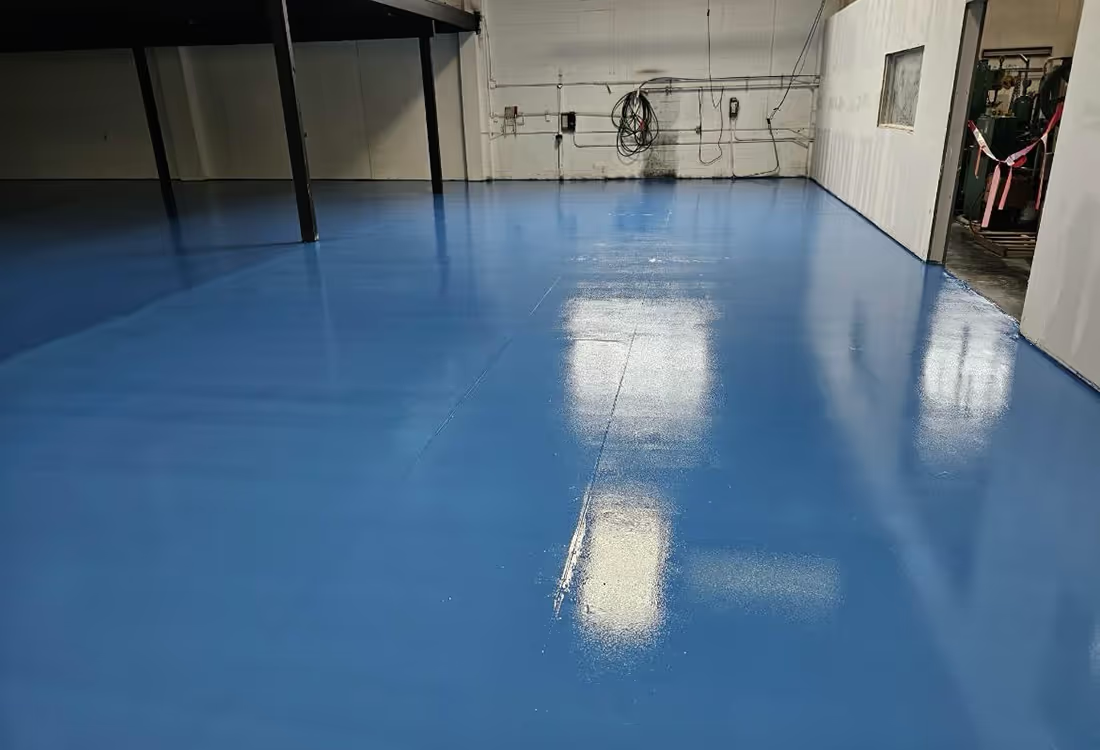
Commercial floors get specified backwards from the way the space is used. The cleaning regime, the wheeled loads crossing the floor and whether anything gets spilled on it all change the build before appearance is considered at all, which is why a shop unit and a workshop rarely end up with the same floor. The materials are the same on both sides of this work. What changes between a two-car garage and a trade unit is how thick the build has to be, which flake or color is chosen, and how much repair the existing slab needs first. The full range of resin floor systems sets those options out in more detail.
A trade unit and a home garage go through the same short list of steps. We check what is stuck to the slab and take it off, grind the concrete until it is open, fill the cracks and hollows, then lay the resin down in order: the base first, whatever is going into it next, and the seal last, with curing time between each. What sets the number here more often than anything is what the slab is found to want added to it, because a moisture vapor barrier or an anti-slip topcoat is decided on the concrete itself, and neither is optional once it is called for. After that come the area, the amount of grinding and patching, and which system goes on top. Send us a photo of the floor and what is sitting on it now, and we will set out what epoxy flooring in La Cañada Flintridge would involve and how long it would need.
GET A FREE Estimate
Please give us a call or fill in our contact form to receive more information about our flooring services.
For instant reply you can call us, text us, or connect with us on social media.

