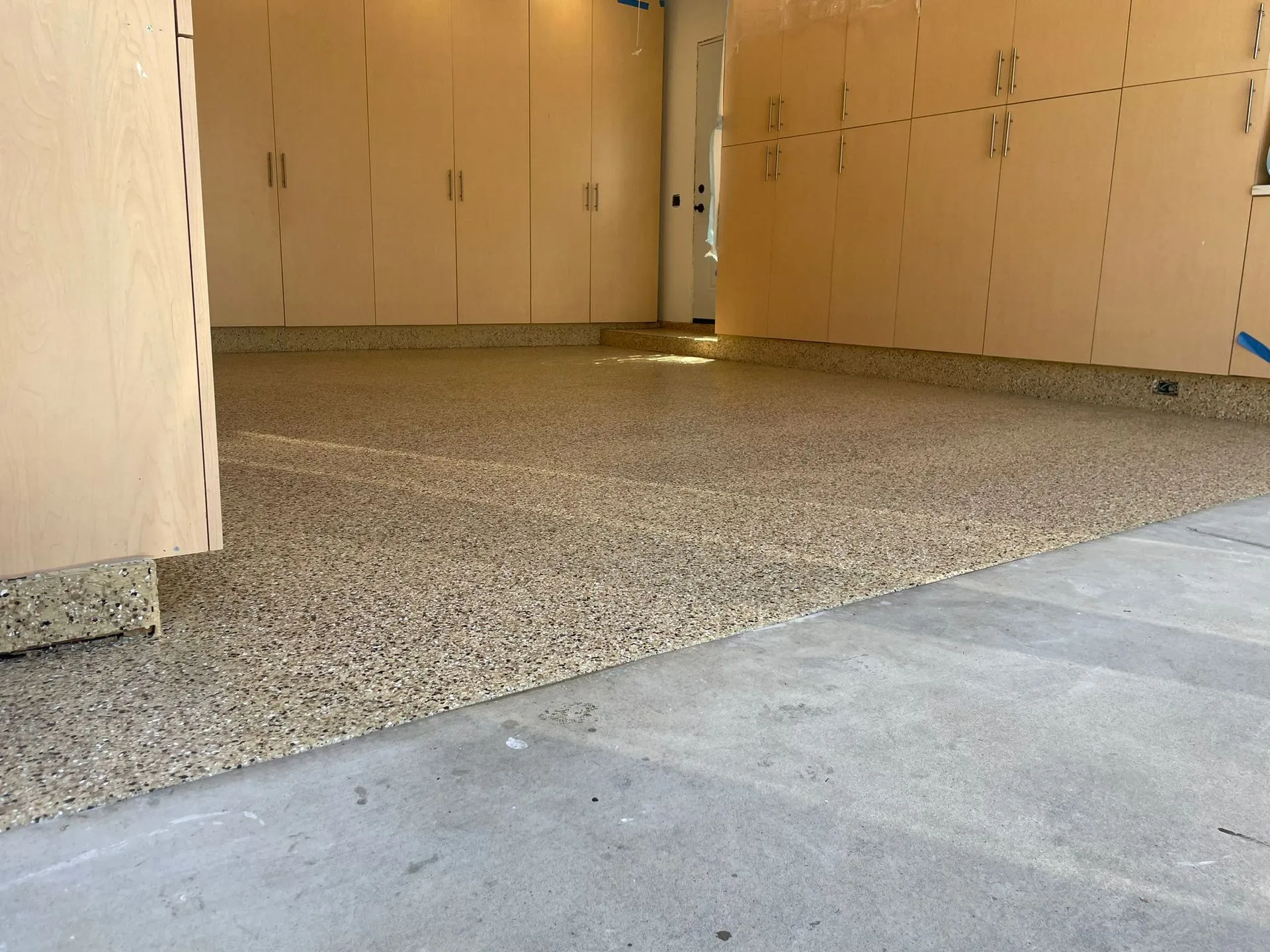

Everything about the result is decided by the concrete, so the first thing through the door is the grinder. It works the bay down to bare slab, and it takes with it whatever has been applied over the years: old floor paint, a coating from a box that never took to the floor, curing compound from the pour, and oil that has worked its way into the pores beneath a parked car. Grinding is not only about removal. A finished slab has been closed up by the trowel that flattened it, and until that surface is opened again there is nothing for an epoxy base to hold on to.
Whatever appears once the bay is bare then gets attended to. Cracks are widened, filled and dressed flat so the finished floor runs over them unbroken. The joints the slab uses to move are kept open through the coating, not buried under it, because concrete that cannot expand will relieve itself by cracking. If the slab is drawing damp up from underneath, that is handled below the epoxy rather than after it. None of this makes a garage a bad candidate. It is simply part of the number.
The floor then goes on in three passes: an epoxy base coat carrying the tint, flake or pigment cast into that coat while it remains wet, and a clear polyaspartic seal closing the whole thing. On a two-car Malibu bay that is six to nine hours of work. Where the slab has actually dropped rather than worn, it needs bringing back to level first, or the coating simply reproduces the fall. And where the concrete is in good enough shape to be the floor itself, polishing it is the alternative to covering it.
Almost every garage we quote in Malibu comes down to one of three epoxy finishes, and the real question is how much the floor has to hide between cleans. We keep a solid sample of every blend, and the decision usually makes itself the moment one is sitting on your floor.
Flake is what most Malibu garages end up with. Vinyl chips are broadcast into the base coat while the epoxy is still live, built up until nothing of the concrete shows, then locked under a clear seal. That leaves a surface with some texture to it, which is worth having on a floor a wet car parks on, and a pattern that keeps grit, scuffs and the odd oil spot from standing out. It asks the least of the slab underneath it.
Solid color leaves the chips out entirely: tinted epoxy beneath the same clear seal, one continuous shade the length of the bay. It is easily the sharpest looking. Nothing interrupts it though, so every mark reads, and it wants a slab that came up clean. Grays and quiet earth tones are what most people choose. Where the bay is used for more than the car, an even floor is what makes it feel like part of the house.
Metallic epoxy sits apart from both. The color is carried in the resin and moved while the floor is curing, so the pattern is particular to that floor and cannot be made again. That is the point of it, and the risk in it, because there is nothing to approve before it exists. Keep it for a bay you look at rather than work in, and accept that a repair in it is never invisible.
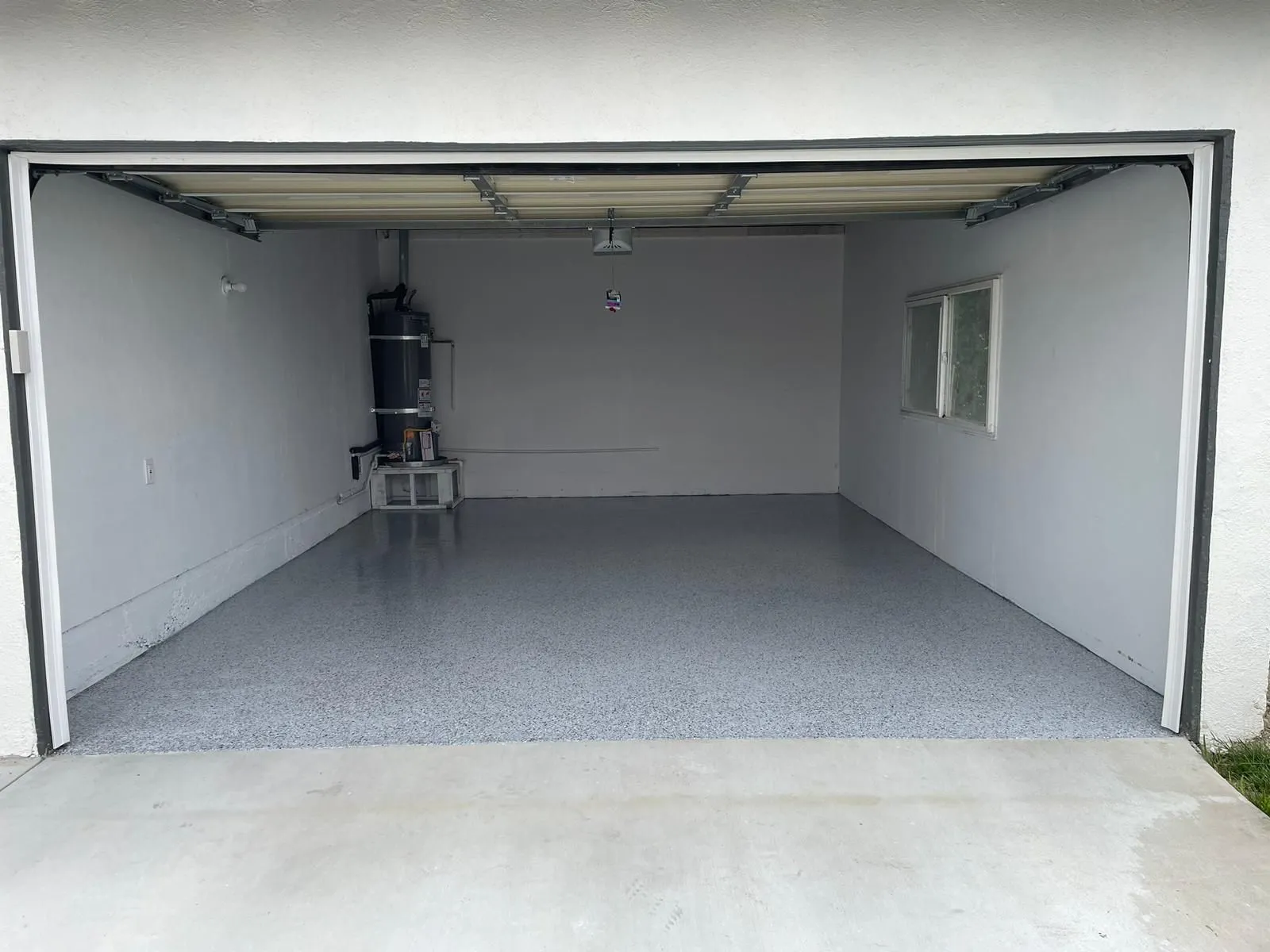

Two things do most of the work in the figure. The first is area, and the Malibu bays we measure mostly fall somewhere from 450 to 700 square feet. The second is what the concrete is like, since a sound slab wants nothing more than grinding while a broken one wants opening, rebuilding and grinding again before an epoxy base can go on. Allow $5 to $7 per square foot on a Malibu garage, and a day on site for a two-car bay.
The finish you settle on counts too. Solid color takes us the least time, metallic the most, with flake between the two. So does the resin over the top. Polyaspartic goes off in hours rather than the days an epoxy topcoat needs, which is what keeps the job to a single visit rather than several. The price we give is taken from your slab, not from a rate sheet.
We are rated 5.0 across 120+ reviews and are usually two weeks or so from starting. Measure the bay, take a photo of the floor as it is, and send us both. You can also reach us on (818) 359-3932. The figure that comes back is worked out for your own garage in epoxy or polyaspartic.
GET A FREE Estimate
Please give us a call or fill in our contact form to receive more information about our flooring services.
For instant reply you can call us, text us, or connect with us on social media.

